World Culture Night Valley Stream South!
- Joshua Berson
- Mar 26
- 6 min read

by Lauren Fraser
South's Annual 20th World Culture featured a wide range of cultural performances, beginning with Classical Indian, choreographed by Zahra Shadid and Sophia Singh and performed by 12 dancers. This performance honored one of the world's oldest dance traditions, blending intricate hand gestures, expressive storytelling, and rhythmic footwork that reflect centuries of Indian heritage. They brought the culture to life with grace and devotion, making the stage feel like a living temple of art.
The program continued with Chinese Fan and Umbrella, choreographed by Talia Brochman and Isaiah Moreno and performed by 14 dancers. The dancers showcased symbols deeply rooted in Chinese culture, with fans representing elegance and umbrellas symbolizing protection and beauty. Their flowing movements and soft formations created a visual poem that celebrated harmony and tradition.
Salsa followed, choreographed by Gabriela Gonzalez and Ashlyn Hernandez and performed by 53 dancers. Rooted in Afro-Caribbean rhythms and Latin passion, this Salsa performance radiated cultural pride through its fast footwork and joyful expression. They captured the heartbeat of the style, turning the stage into a celebration of community and rhythm.
Urban Dance, choreographed by Hailey Clarke, Leah Brown, and Sudan Belnavis, brought 20 dancers to the stage. Urban dance, born from street culture and creative self-expression, came alive through bold musicality and sharp movement. Their performance honored the roots of hip-hop culture by bringing authenticity, attitude, and innovation to the stage.
Arnis was next, choreographed by Aidan Franco, Leo Rodriguez, and Micaela Viscarra and performed by 32 dancers. This routine highlighted the Filipino martial art of Arnis, a tradition that reflects discipline, respect, and centuries of cultural resilience. Their synchronized movements honored the heritage of the Philippines with power and precision.
African Dance, choreographed by Sudan Belnavis, Leah Brown, and Sasha Hicks, featured 12 dancers. Drawing from traditions across the African diaspora, this performance celebrated community, rhythm, and storytelling through grounded movement and vibrant energy. They honored the culture with every beat, creating a performance full of spirit and ancestral pride.
Swing followed, choreographed by Sasha Hicks and Caitlyn Schultheiss and performed by 30 dancers. Swing dance, born from African American jazz culture, is known for its lively footwork, upbeat rhythms, and joyful partnering. This performance captured the playful, social spirit of the style, honoring its roots with energy and charm.
Step, choreographed by Leah Brown, Saniya Gilles, Nylah Hollingsworth, and Laila Smith, brought 10 dancers to the stage. Stepping, rooted in African American fraternities and sororities, filled the stage with unity, rhythm, and powerful body percussion. Their precision honored the tradition's emphasis on teamwork, pride, and cultural identity.
Cumbia, choreographed by Tiffany Cabrera and Ernesto Salazar and performed by 42 dancers, celebrated the blended Indigenous, African, and Spanish roots of Colombian Cumbia through smooth steps and rhythmic swaying. They brought the warmth and storytelling of the culture to the stage with elegance and joy.
A vocal performance followed, with Alisha Akim singing "Llorona" by Angelica Vale.
Country came next, choreographed by Isabella Dombrowsky, Gabriela Gonzalez, Sasha Hicks, and Micaela Viscarra and performed by 42 dancers. Drawing from American folk traditions, this routine captured the storytelling, charm, and upbeat spirit of country culture. Their lively movements and bright energy brought the rustic, down-home feel of the genre to life.
Vogue, choreographed by Talia Brochman and Isaiah Moreno and performed by 9 dancers, honored Black and Latino LGBTQ+ ballroom culture. Their sharp poses and fierce movement celebrated identity, confidence, and self-expression with authenticity and pride.
Bhangra followed, choreographed by Jamal Ashraf and Zahra Shahid and performed by 13 dancers. This performance celebrated the joyful harvest dance of Punjab, filled with energetic jumps, strong rhythms, and vibrant expression. They honored the culture by bringing its infectious spirit and celebratory energy to the stage.
Hip Hop, choreographed by Leah Brown, Sasha Hicks, and Caitlyn Schultheiss and performed by 26 dancers, showcased musicality, attitude, and dynamic movement. Their performance honored the culture's creativity and expressive power.
Tai Chi Racquetball, choreographed by Aidan Franco and Leo Rodriguez and performed by 8 dancers, blended the meditative flow of Tai Chi with the playful coordination of racquet movement. They honored the Chinese tradition of mindful movement while adding a modern twist.
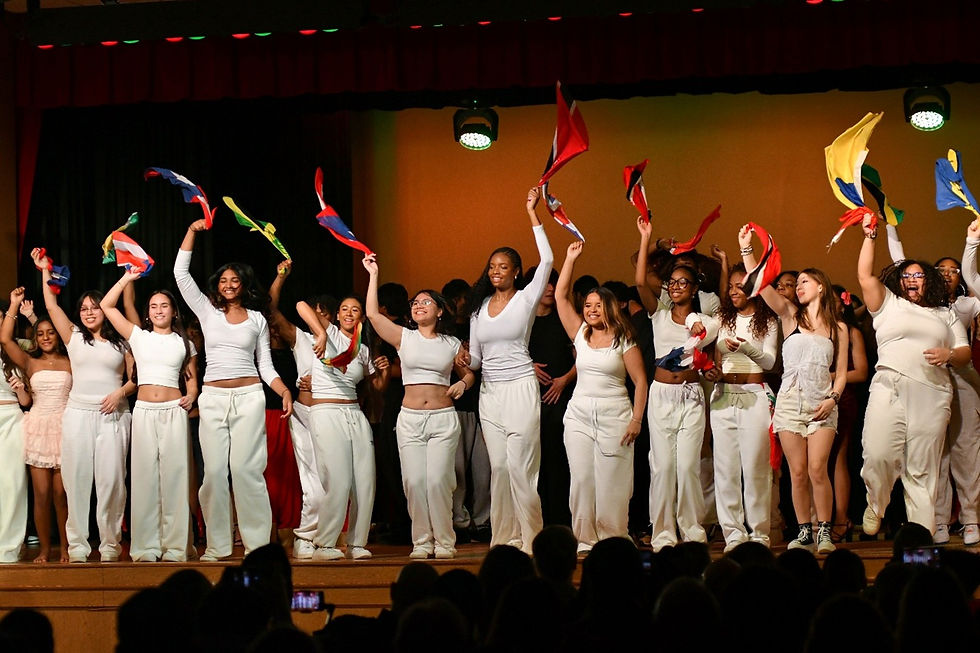
Reggaeton, choreographed by Sudan Belnavis and Isabella Bermudez and performed by 47 dancers, celebrated the Afro-Caribbean and Latin roots of reggaeton with rhythmic isolations and bold musicality. They brought the culture's urban energy and infectious beat to the stage with confidence.
Another vocal performance followed, with Leyla Moze singing "Le Festin" by Camille.
Chinese Lion, choreographed by Sudan Belnavis, Aidan Franco, Gabriela Gonzalez, Leonardo Rodriguez, and Ernesto Salazar and performed by 15 dancers, honored a centuries-old Chinese tradition meant to bring luck, strength, and celebration. Their teamwork and lively movement brought the lion to life, filling the stage with cultural pride.
The band Mosquito Joe then performed "Impacto," composed of Talia Rose Brochman as singer, Pablo Orellana as singer, Raymond Macanas on guitar, and Adetobi Fasanya on guitar.
Tinikling followed, choreographed by Sudan Belnavis, Gabriela Gonzalez, Leonardo Rodriguez, and Micaela Viscarra and performed by 37 dancers. This Filipino folk dance, inspired by the movements of birds and the rhythm of bamboo poles, came alive with agility and cultural pride. Their timing and teamwork honored the tradition beautifully.
Chinese Ribbon, performed by Mo Lin and Isaiah Moreno with junior choreographers Talia Brochman and Tina Huang, featured 15 dancers. This performance celebrated the elegance and symbolism of Chinese ribbon dancing, where flowing ribbons represent grace, prosperity, and harmony. Their movements created sweeping patterns that honored the culture's artistic beauty.
Garba came next, choreographed by Zahra Shadid and Sophia Singh and performed by 21 dancers. This traditional Gujarati folk dance lit up the stage with circular formations, rhythmic claps, and joyful energy. They honored the culture by capturing the festive spirit of community celebration.
Another vocal performance followed, with Gabriela Gonzalez and Clair Valenzuela singing "Akin Ka Na Lang" by Morissette.
Bachata, choreographed by Isabelle Bermudez and Sheerlyn Palaguachi and performed by 48 dancers, showcased smooth footwork, close connection, and romantic rhythm. They honored the style's emotional storytelling and cultural warmth.
K-Pop, choreographed by Talia Brochman and Brianna Dean and performed by 37 dancers, celebrated the global phenomenon of Korean pop culture with sharp choreography, synchronized movement, and expressive performance. They honored the style's blend of modernity, precision, and vibrant stage presence.
Mexican Folkloric Dance, choreographed by Micaela Viscarra, Isabella Bermudez, and Sudan Belnavis and performed by 15 dancers, concluded the showcase. This performance honored Mexico's rich regional traditions through colorful movement, expressive footwork, and cultural storytelling. They brought the pride and spirit of folklórico to the stage with authenticity.
Swing, choreographed by Sasha Hicks and Caitlyn Schultheiss, returned with 30 dancers. Swing dance, rooted in African American jazz culture, is known for its lively rhythms, upbeat partnering, and joyful improvisation. Their performance honored the style's social spirit and infectious energy.
Indian Fusion, choreographed by Zahra Shahid and Sophia Singh, featured 15 dancers. This performance blended classical Indian elements with modern movement, celebrating the evolution of Indian culture across generations. They honored tradition while showcasing creativity and cultural pride.
Chinese Dragon, choreographed by Aidan Franco, Leo Rodriguez, and Ernesto Salazar and performed by 12 dancers, brought the majestic Chinese dragon to life, symbolizing power, luck, and prosperity. Their coordinated movement honored a tradition that has been celebrated for centuries.
Polynesian, choreographed by Caitlyn Schultheiss and Micaela Viscarra and performed by 31 dancers, honored the culture beautifully with grounded movement, storytelling hands, and rhythmic hips. Their performance radiated respect, pride, and a deep appreciation for the islands' traditions.
Tae Kwon Do, choreographed by Jamal Ashraf, Aidan Franco, and Arsh Sondhi and performed by 22 dancers, showcased the Korean martial art's discipline, strength, and cultural philosophy. Their sharp forms and focused energy honored the tradition with power and respect.
Merengue, choreographed by Tiffany Cabrera and Gabriela Gonzalez and performed by 36 dancers, brought lively hip movement and joyful rhythm to the stage. They honored the dance's festive spirit and cultural heartbeat.
A vocal performance followed, with Sudan Belnavis singing "So Long" by Nadia Batson.
Bollywood, choreographed by Jamal Ashraf, Shannon Shabaz, and Zahra Shahid and performed by 42 dancers, celebrated the vibrant world of Indian cinema with expressive storytelling, colorful movement, and high energy. They honored the culture by capturing the joy and drama that define Bollywood dance.
Chinese Yoyo, choreographed by Ernesto Salazar and Mack Shahbaz and performed by 10 dancers, highlighted a traditional Chinese performance art known for skill, rhythm, and playful creativity. Their tricks and timing honored the cultural roots of the diabolo while thrilling the audience.
West Indies, choreographed by Sudan Belnavis, Isabella Bermudez, and Sophia Singh and performed by 31 dancers, celebrated the rich cultural fusion of the Caribbean. With rhythmic movement, vibrant energy, and storytelling rooted in island traditions, they honored the spirit, resilience, and joy of West Indian culture.


Comments